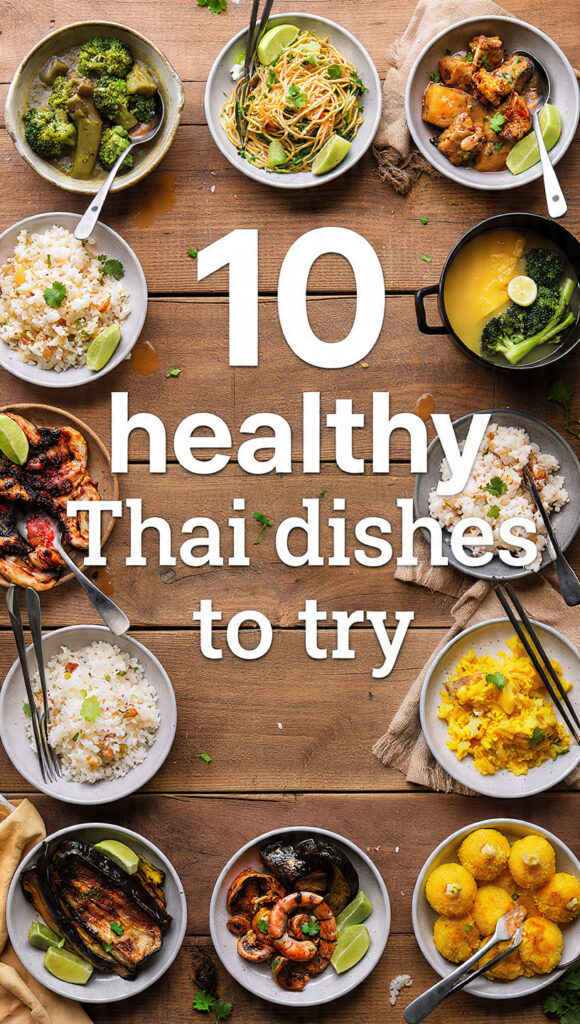
10 Healthy Thai Dish Ideas You Can Feel Good About Eating
Thai food has a reputation for being bold, flavorful, and sometimes a little indulgent. The good news is that many classic Thai dishes are naturally light, veggie-packed, and full of fresh herbs and spices.
This post may contain affiliate links, which means I’ll receive a commission if you purchase through my link, at no extra cost to you. Please read full disclosure here.
By choosing the right cooking methods, proteins, and portion sizes, you can enjoy Thai flavors while still eating healthfully. Use this list as inspiration for meal planning, weeknight dinners, or a healthier takeout order.
Tom Yum Goong (Hot and Sour Shrimp Soup)
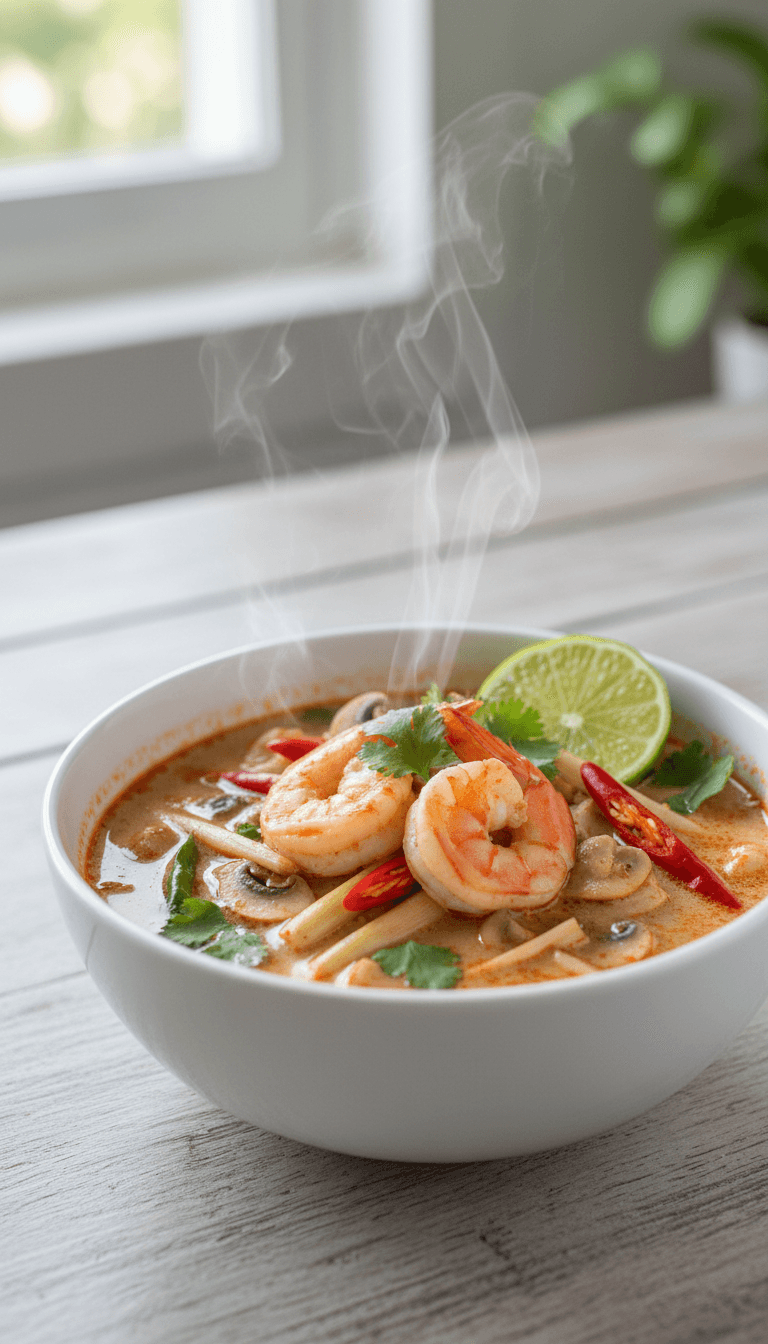
Tom Yum Goong is a fragrant, spicy-sour soup made with shrimp, lemongrass, kaffir lime leaves, galangal, and fresh lime juice. It’s naturally low in calories and loaded with herbs that add flavor without fat.
- Choose plenty of mushrooms and tomatoes for extra fiber
- Ask for less chili oil and no added sugar in restaurant versions
- Use low-sodium broth if making it at home
The broth is light yet satisfying, and the spice can help curb your appetite. It’s a great starter or a light main when paired with brown rice.
Action tip: Start your Thai meal with a bowl of Tom Yum instead of a fried appetizer to cut calories and boost nutrient intake.
Som Tum (Green Papaya Salad)
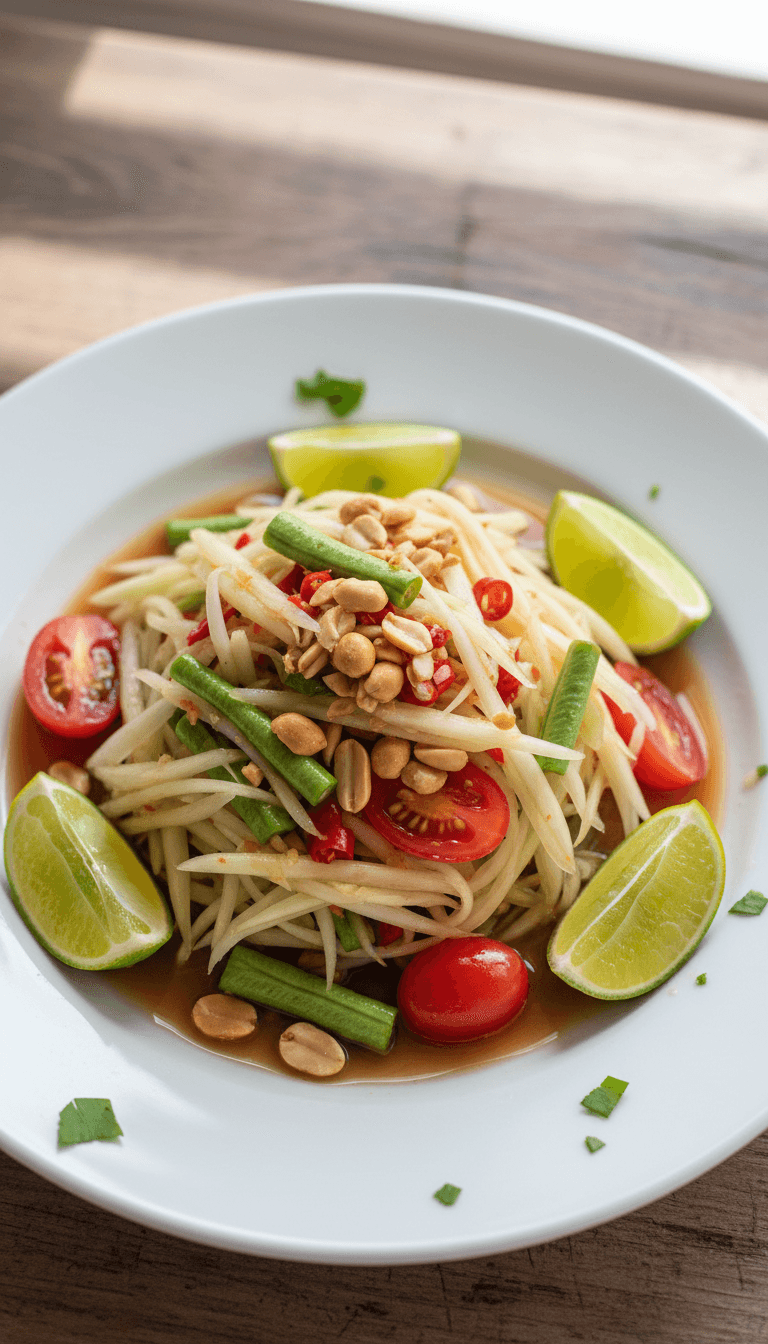
Som Tum is a crunchy, refreshing salad made from shredded green papaya, tomatoes, long beans, garlic, chilies, and lime. It’s light, tangy, and naturally low in fat.
- Ask for less fish sauce and minimal added sugar in the dressing
- Skip dried shrimp or salty peanuts if you’re watching sodium
- Add grilled chicken or tofu on the side for a complete meal
The raw papaya provides fiber and a satisfying crunch, while the lime and chili keep your taste buds happy. It’s a great swap for heavier noodle or rice dishes.
Action tip: When ordering Som Tum, request “little sugar and less fish sauce” to keep it fresh and zesty without hidden calories.
Tom Kha Gai (Coconut Chicken Soup)
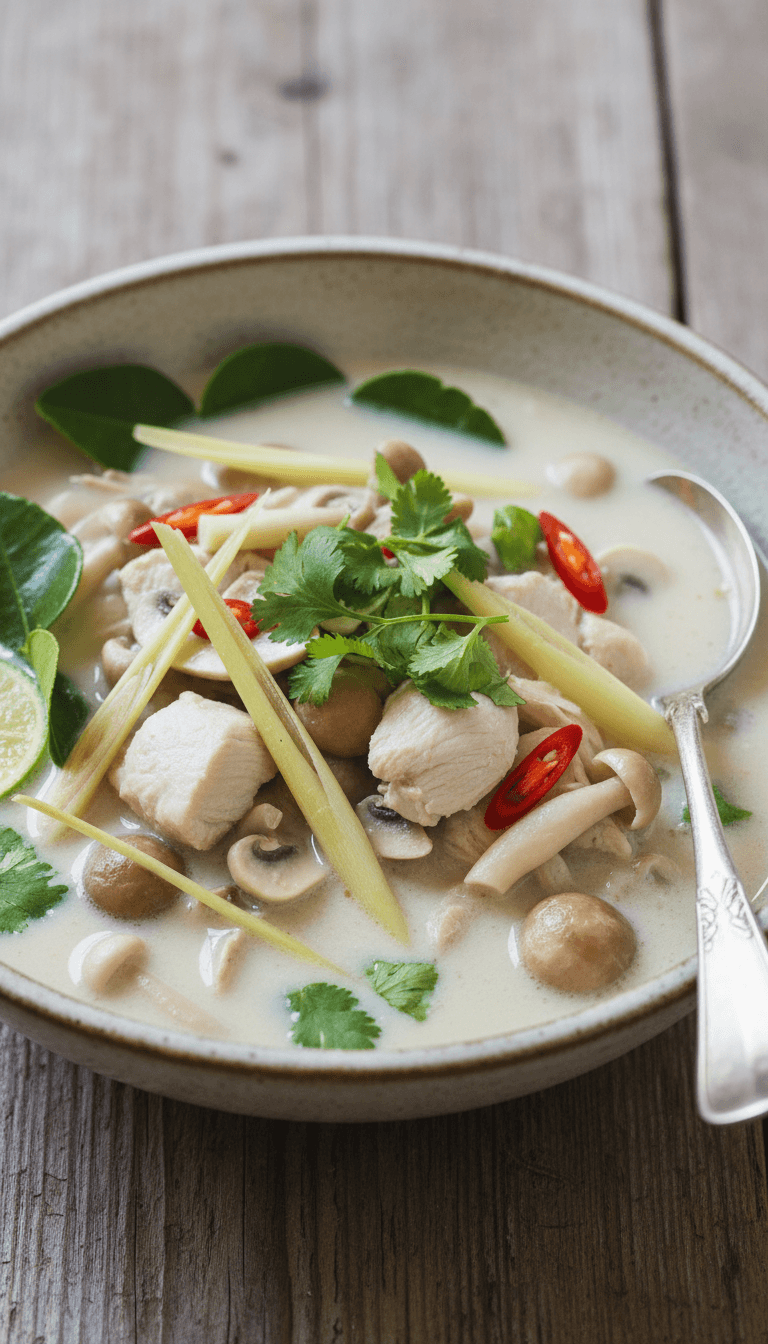
Tom Kha Gai is a creamy-tasting soup made with coconut milk, chicken, galangal, lemongrass, and mushrooms. While coconut milk adds richness, you can still keep this dish lighter with a few tweaks.
- Use light coconut milk or half coconut milk and half chicken broth
- Load up on mushrooms, onions, and leafy greens
- Trim visible fat from the chicken or use chicken breast
This soup offers healthy fats from coconut plus protein from chicken, making it filling without needing a big portion of rice. The aromatic herbs also bring anti-inflammatory benefits.
Action tip: At home, dilute full-fat coconut milk with broth at a 1:1 ratio to enjoy the flavor with fewer calories.
Yam Woon Sen (Glass Noodle Salad)
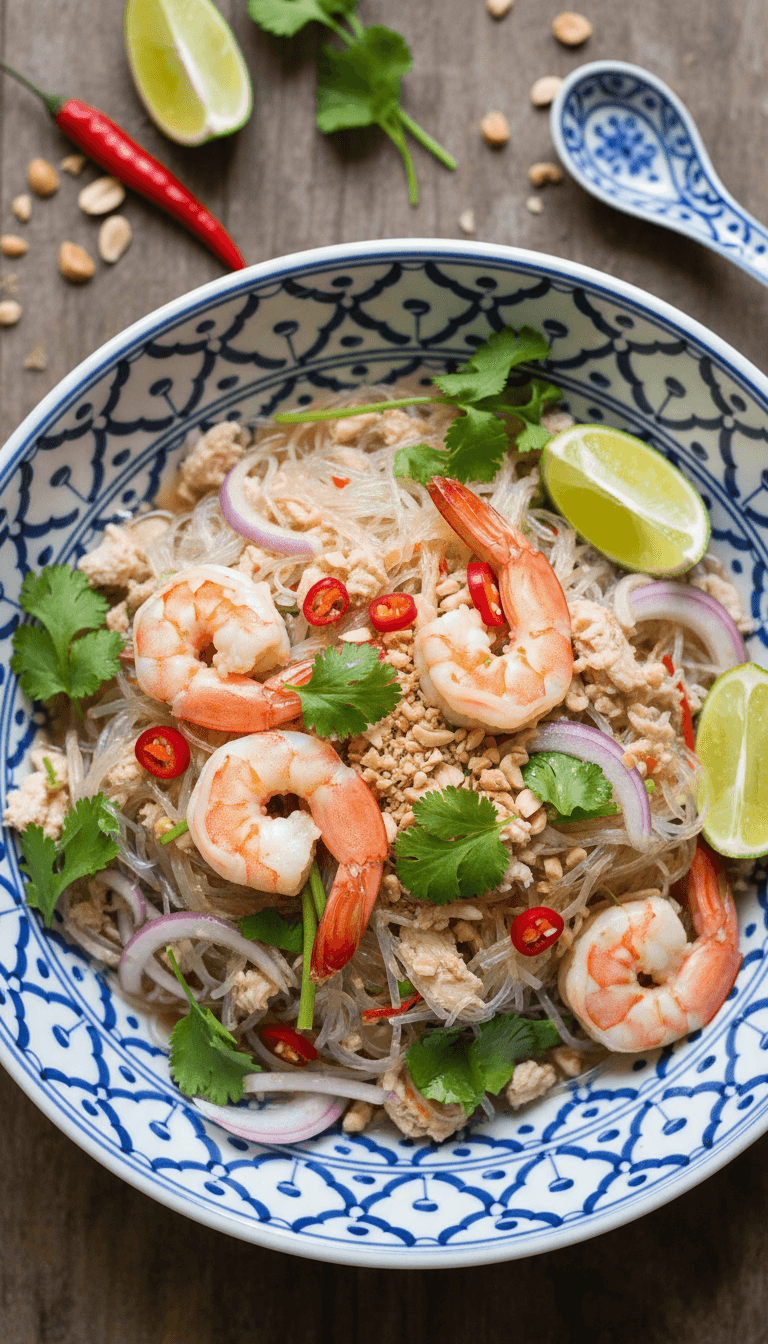
Yam Woon Sen is a light glass noodle salad made with bean thread noodles, minced chicken or shrimp, onions, herbs, and a lime-based dressing. It delivers big flavor with a balance of lean protein and carbs.
- Use more vegetables like celery, carrots, and lettuce for extra bulk
- Choose lean minced chicken or tofu instead of fatty pork
- Ask for less oil in the dressing when dining out
The lime and fish sauce dressing is punchy enough that you don’t need a lot of oil. This dish works well as a main course, especially for lunch.
Action tip: When making it at home, double the veggies and halve the noodles to boost fiber and reduce overall calories.
Larb Gai (Thai Chicken Salad)
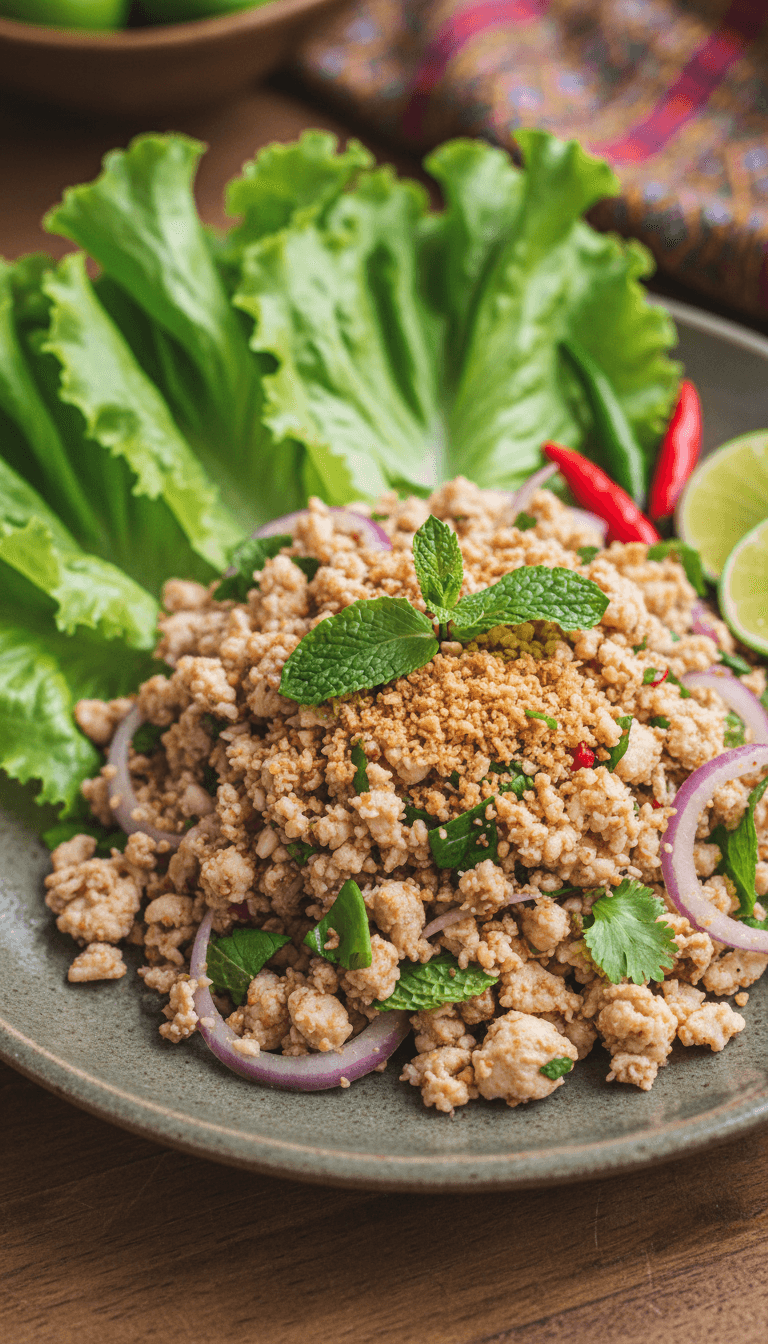
Larb Gai is a minced chicken salad flavored with lime juice, fish sauce, roasted rice powder, and fresh herbs like mint and cilantro. It’s high in protein and typically served with lettuce or cabbage leaves.
- Use skinless chicken breast or ground turkey for a leaner option
- Go heavy on the herbs for more volume and freshness
- Pair with raw veggies instead of sticky rice if you want to cut carbs
This dish is very satisfying thanks to the protein and umami-rich seasonings, yet it’s still light. It’s also quick to cook, making it perfect for weeknights.
Action tip: Serve Larb Gai in lettuce cups for a crunchy, low-carb wrap that still feels hearty.
Pad Pak Ruam (Stir-Fried Mixed Vegetables)
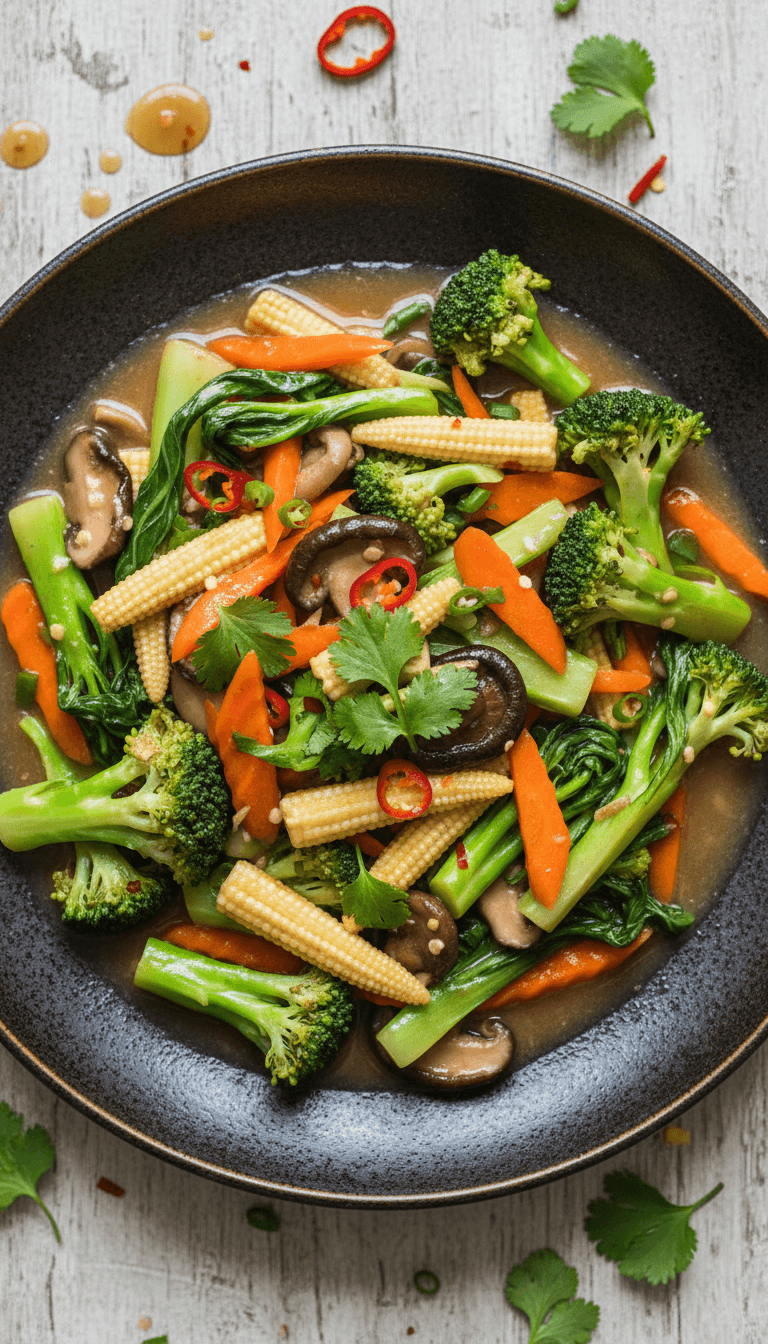
Pad Pak Ruam is a simple mixed vegetable stir-fry often made with broccoli, carrots, baby corn, mushrooms, and leafy greens. It’s one of the easiest ways to increase your veggie intake with Thai flavors.
- Ask for light oil or “less oil” when ordering from restaurants
- Add tofu, shrimp, or chicken for extra protein
- Choose a light soy-based sauce rather than thick, sugary sauces
This dish can be a side or a main when paired with brown rice or quinoa. The variety of vegetables brings fiber, vitamins, and color to your plate.
Action tip: Order Pad Pak as one of your main dishes and share heavier stir-fries so you fill up on vegetables first.
Pla Neung Manao (Steamed Fish with Lime and Garlic)
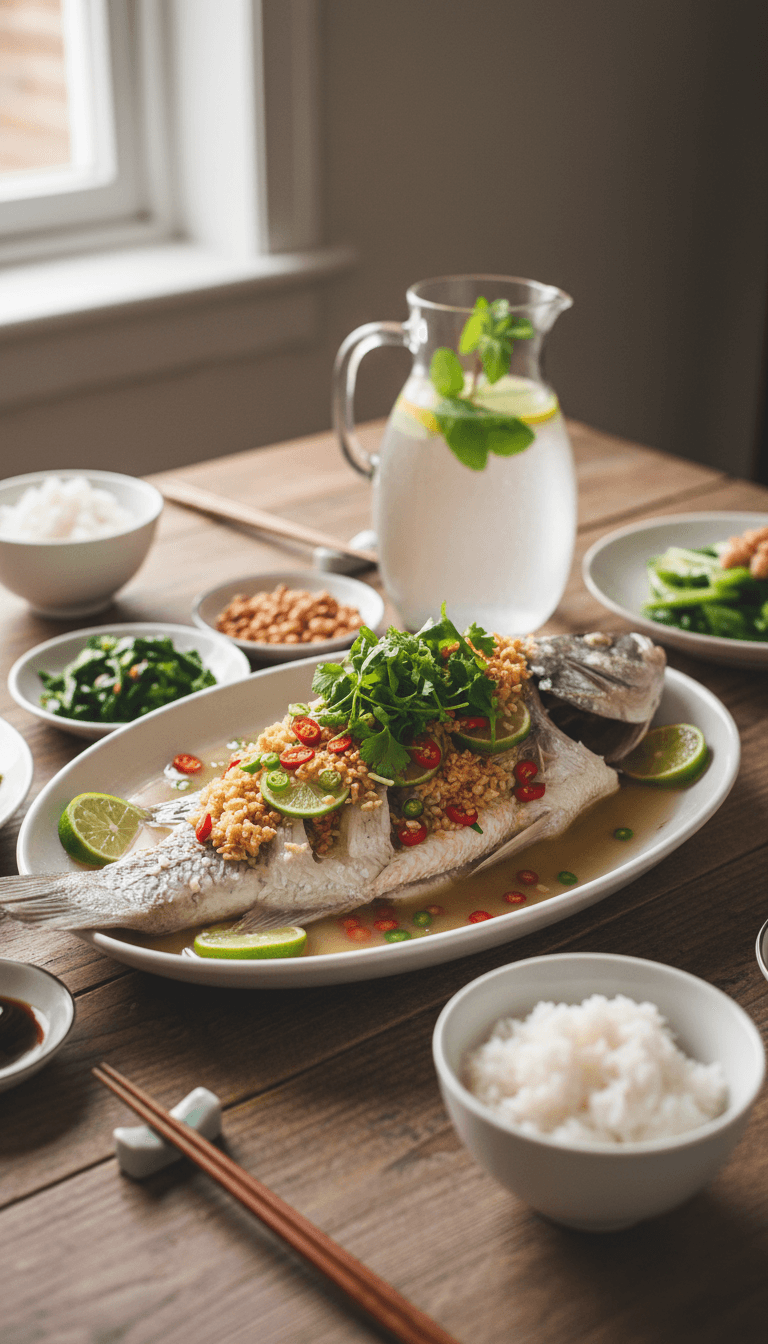
Pla Neung Manao is a whole fish or fillet steamed with lime juice, garlic, chilies, and fresh herbs. Steaming keeps the dish low in fat while preserving delicate flavors.
- Choose white fish like sea bass, snapper, or tilapia
- Ask for less sugar in the sauce and more lime for brightness
- Pair with steamed vegetables instead of fried rice
The combination of lean protein, minimal oil, and sharp citrus makes this one of the healthiest Thai mains. It’s also naturally gluten-free.
Action tip: When eating out, swap fried fish dishes for Pla Neung Manao to enjoy seafood without extra batter and oil.
Gaeng Jued (Clear Vegetable and Tofu Soup)
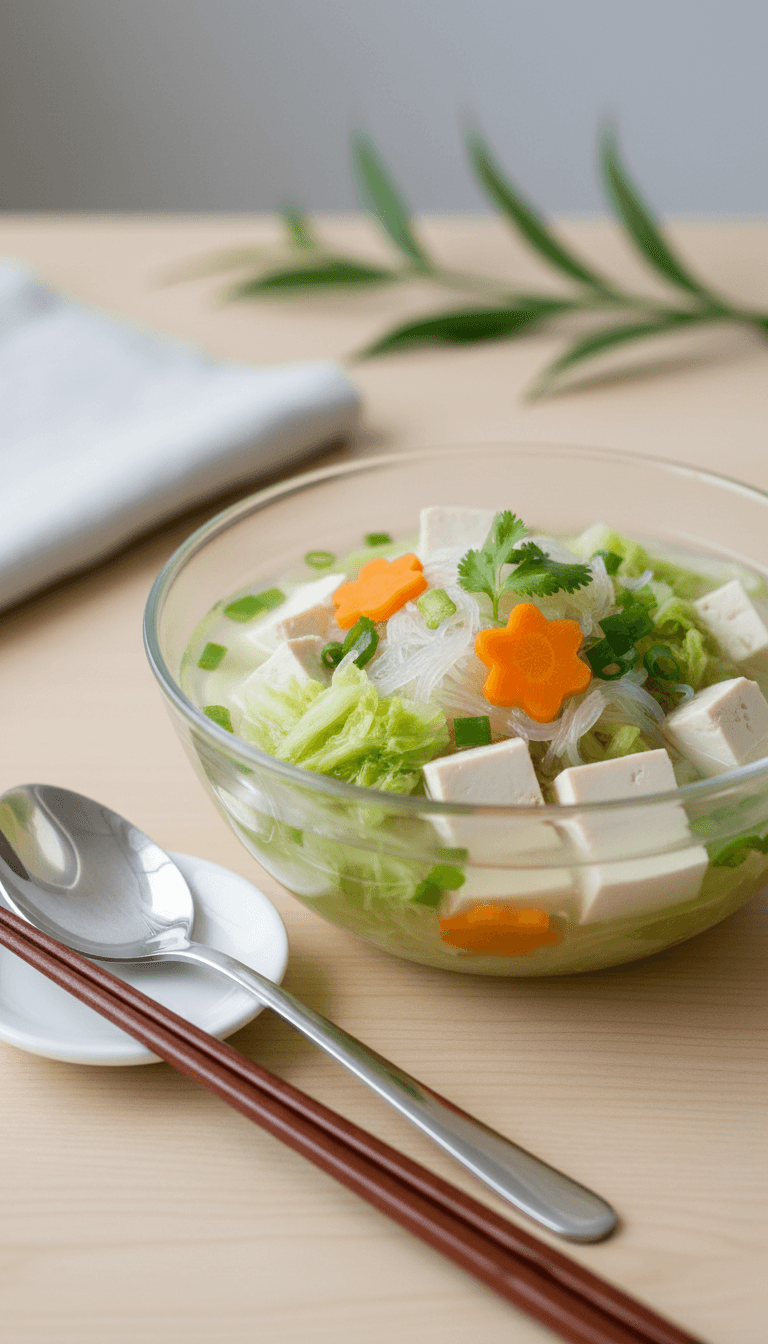
Gaeng Jued is a mild, clear soup usually made with soft tofu, cabbage, glass noodles, and carrots in a light broth. It’s comforting, low in fat, and gentle on digestion.
- Use low-sodium broth to keep sodium in check
- Add extra tofu for more protein and staying power
- Include leafy greens like napa cabbage or spinach
This dish is ideal if you prefer less spicy foods but still want Thai flavors. It works well as a light dinner or a starter before a shared meal.
Action tip: Keep a batch of Gaeng Jued in the fridge for an easy, low-calorie lunch you can reheat in minutes.
Thai Basil Stir-Fry with Chicken (Pad Kra Pao Gai, Lightened)
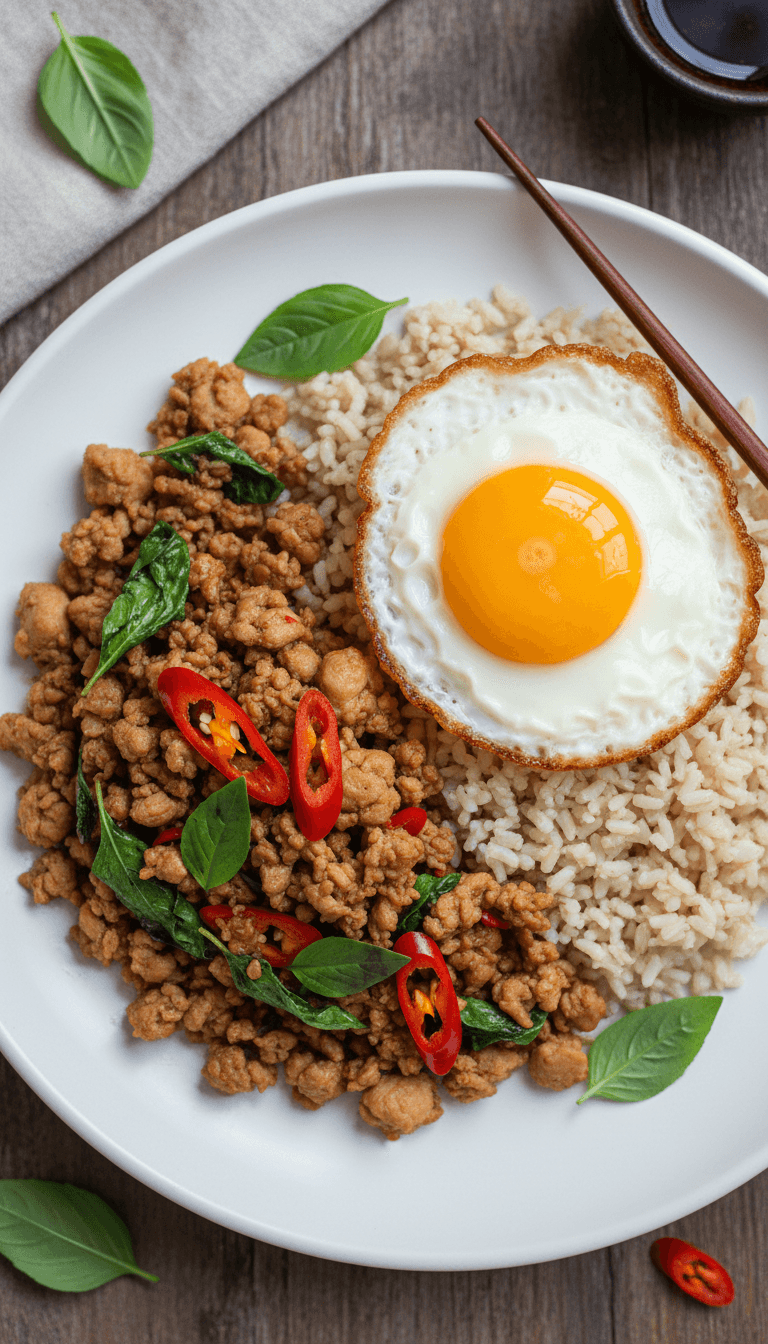
Pad Kra Pao is often oily and served with a fried egg, but it can be made much healthier with small changes. The heart of the dish is lean meat stir-fried with garlic, chilies, and fresh holy basil.
- Request less oil and no added sugar in the sauce
- Choose chicken breast, turkey, or tofu instead of fatty pork
- Ask for a steamed or poached egg instead of fried, or skip the egg
Served with brown rice and extra vegetables, this becomes a balanced, protein-rich meal. The basil and chili deliver intense flavor so you won’t miss the extra oil.
Action tip: When ordering, say “less oil, extra vegetables, and no sugar in the sauce” to instantly lighten this favorite.
Massaman Curry with Vegetables (Made Lighter)
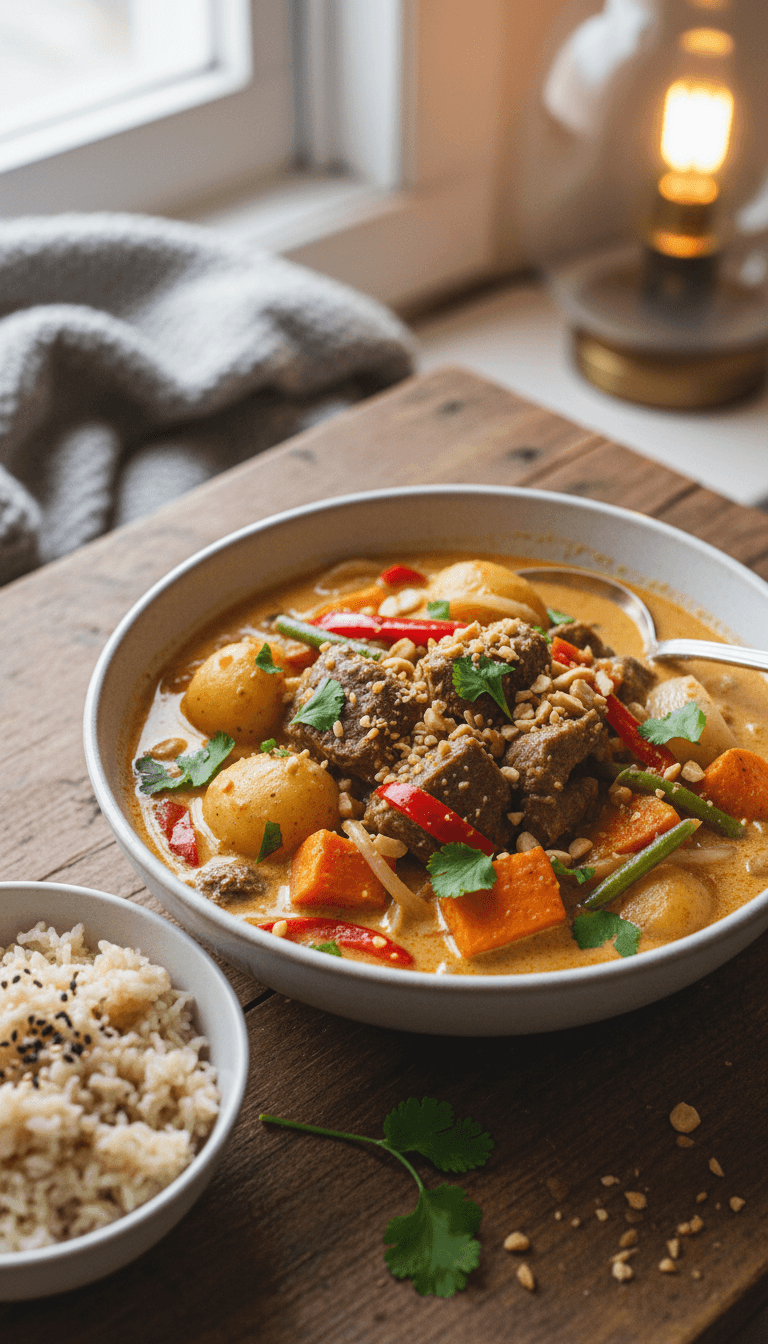
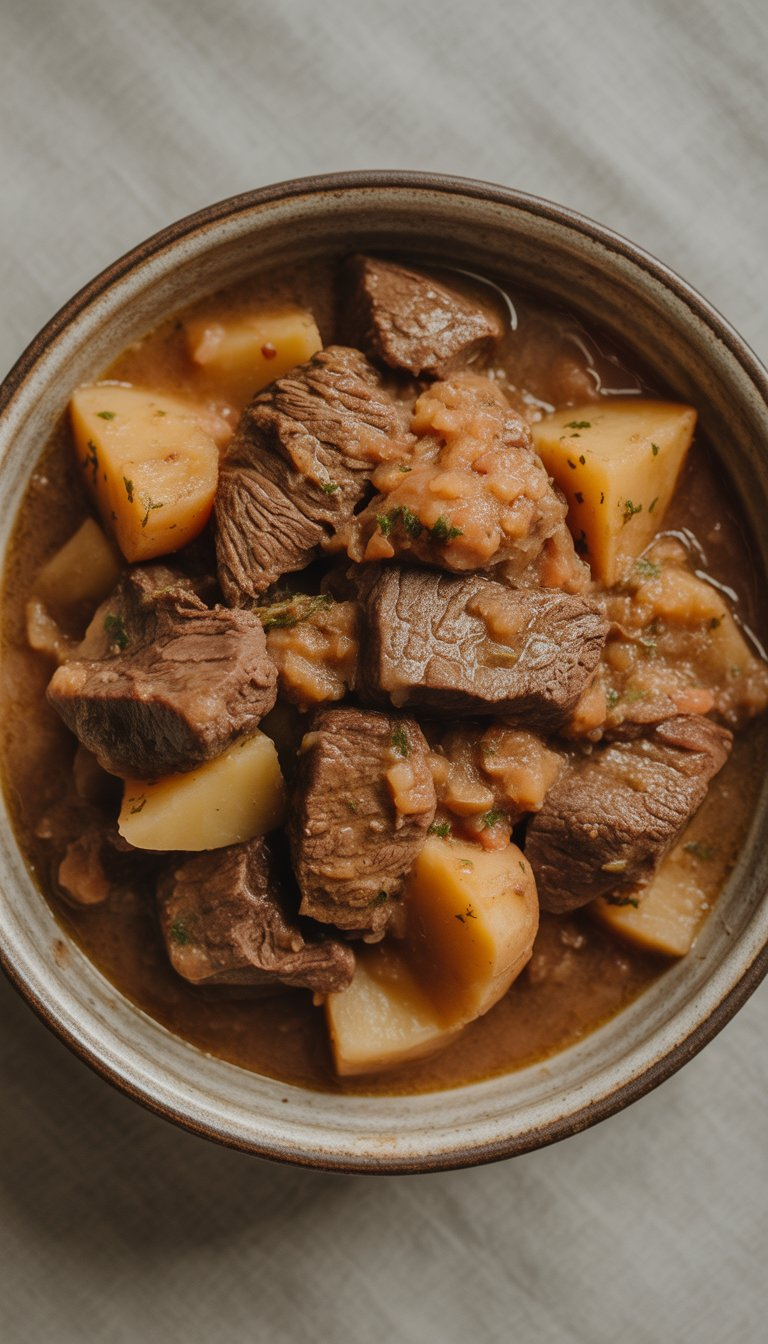
Massaman curry is typically rich, but it can still fit into a healthy diet with smart adjustments. The curry paste includes warming spices like cinnamon and cardamom, paired with coconut milk, potatoes, and protein.
- Use light coconut milk or mix with vegetable broth
- Load up on vegetables like carrots, green beans, and cauliflower
- Use a modest portion of brown rice and treat the curry as the star
By controlling the coconut milk and portion size, you keep the dish satisfying without going overboard. The spices also add depth that makes smaller portions feel indulgent.
Action tip: At home, start with half the usual coconut milk and replace the rest with broth, then adjust to taste for a lighter but flavorful curry.
Conclusion
Healthy Thai eating is all about emphasizing herbs, vegetables, lean proteins, and lighter cooking methods like steaming, grilling, and clear broths. With a few simple requests at restaurants or small tweaks at home, you can enjoy your favorite Thai dishes without sacrificing nutrition.
Use these ten ideas as a starting point, and don’t be afraid to customize spice levels, oil, and sugar to suit your health goals. Over time, you’ll build a rotation of Thai meals that are as good for your body as they are for your taste buds.